
“A lot of people install tile, and it’s just not scratch-proof. You get cheap tile from a big-box store. You don’t know what the talc rating is. Next thing you know, someone drags a fridge across your floor and your tile’s scratched. So, a lot of tile is completely scratch-resistant, and it is important to do a scratch-proof or a durability test on the tile before you install it.”
The short answer: the Mohs scale ranks how easily a surface scratches, from 1 (talc, the softest) to 10 (diamond, the hardest). Everyday sand and grit sit at about 7, so anything softer, like marble, can slowly scratch and dull. Porcelain and quartz hold up much better.
Clients ask me all the time, "Will this scratch?" The honest answer starts with a simple scale that's been around for about 200 years. Here it is in plain English.
What the Mohs scale is
The scale uses ten minerals. Each one can scratch the minerals below it. That's all it measures: scratch resistance.
| Number | Mineral | Everyday idea |
|---|---|---|
| 1 | Talc | Softest. Baby powder is made from it. |
| 2 | Gypsum | The mineral in drywall |
| 3 | Calcite | The main mineral in marble and limestone |
| 4 | Fluorite | |
| 5 | Apatite | |
| 6 | Feldspar | A main mineral in granite |
| 7 | Quartz | Sand and household dust |
| 8 | Topaz | |
| 9 | Corundum | Sapphire and ruby |
| 10 | Diamond | Hardest. Used on our cutting blades. |
The steps aren't even. Diamond is far harder than corundum, even though they're only one number apart.
Tile and stone on the scale
These are approximate numbers. Every quarry and every product is a little different, so treat them as a guide, not a promise.
| Surface | Mohs (about) | In a shower or kitchen |
|---|---|---|
| Soapstone | 1 to 3 | Very soft. Scratches easily, though many people like the worn look. |
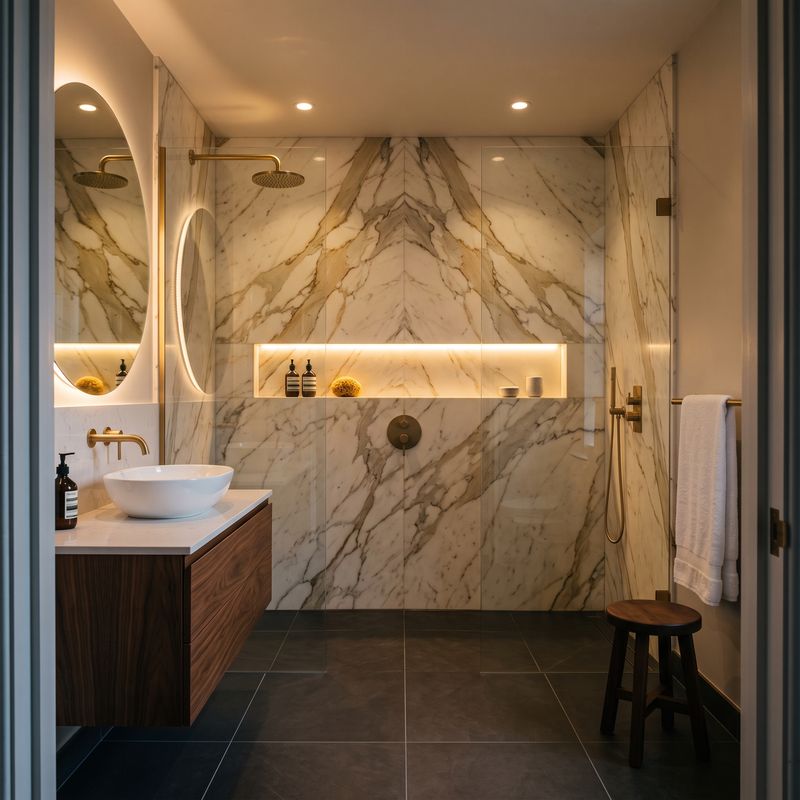
| Marble | 3 | Soft. Can scratch and dull, especially on floors. |
| Limestone | 3 to 4 | Soft. Best on walls or low-traffic floors. |
| Travertine | 3 to 4 | Soft. Similar to limestone. |
| Granite | 6 to 7 | Hard. Holds up well to daily use. |
| Quartz (engineered) | About 7 | Hard. Resists everyday scratches well. |
| Porcelain tile | About 7 to 8 | Very hard. Varies by product and glaze. |
| Glazed ceramic wall tile | Varies | The glaze is usually harder than steel, but it depends on the product. |
Fun fact (approximate): a phone screen's glass starts to scratch at around 6, and the sapphire glass used on many camera lenses is about 9. That's why sand in your pocket can scratch a screen.
Why grit is the real enemy
Household dust and the sand you track in from outside contain quartz, at about 7. Anything softer than 7 can be scratched or dulled by it over time.
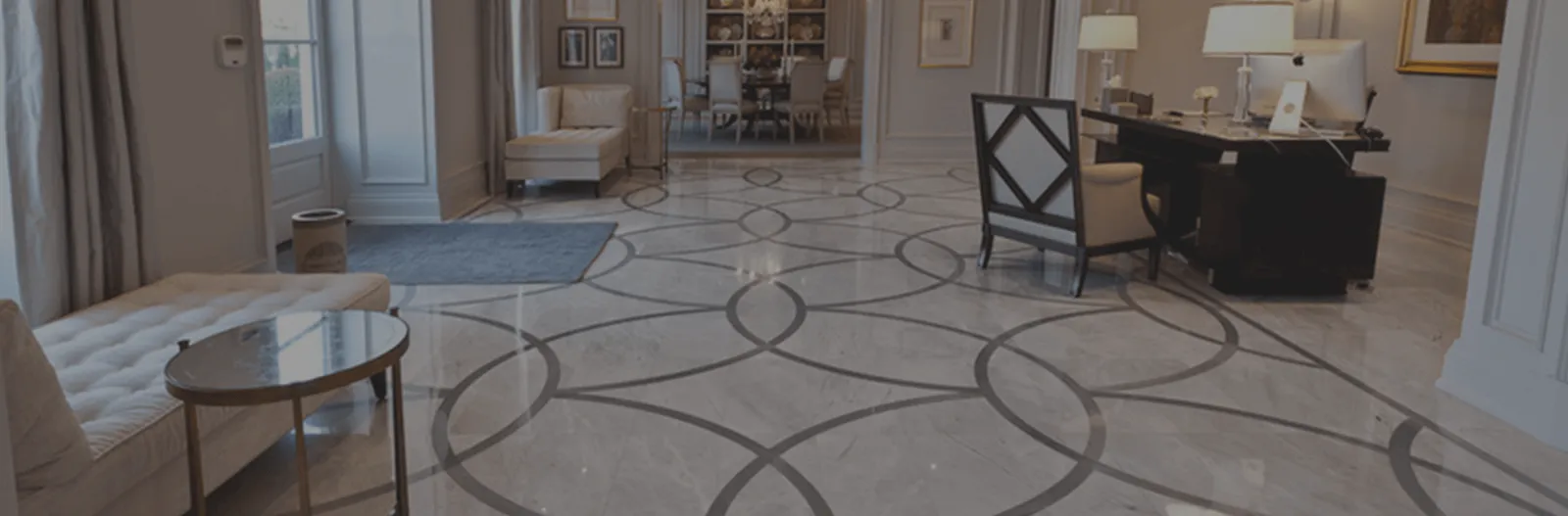
That's why a honed marble floor in a busy entry slowly shows wear paths, while porcelain in the same spot still looks new. It isn't that marble is poor quality. It's just softer than the grit on your shoes.
Scratched marble can be restored
Here's the good news about marble: it can be sanded and polished to bring the finish back. A stone restoration pro uses diamond pads to take off a very thin layer, then polishes it again. Results depend on the stone and the damage, so have a pro look at it first.
For cleaning, sealing and when to call a pro, read our natural stone care guide.
"Scratch-resistant" on the box
Many tiles are marketed as scratch-resistant. That word on a box or a sales sheet isn't a rating. Ask for the actual numbers, check the product's spec sheet, and test a sample before it's installed. Rub it with a key or some sand and see how it looks.
What Mohs doesn't tell you
Mohs is only about scratches. A tile can be hard and still be the wrong choice. It's one of several separate ratings:
- Toughness. Hard isn't the same as tough. Hard tile can still chip or crack if something heavy drops on it.
- Slip resistance (DCOF). How slippery the tile is when wet. This matters most on shower and bathroom floors.
- Wear class (PEI). How well a glazed tile's surface stands up to foot traffic.
Ask about all of them when you're choosing a floor tile. (Porcelain vs Ceramic Tile)
I love marble, and I'll set it anywhere you want it. Just know it's a 3 living in a world full of 7s. Put it where you'll enjoy it, and keep the grit off it.
How to protect your surfaces
- Use entry mats. Catch sand and grit at the door, before it reaches your floor.
- Dust and sweep often. A soft brush or dry microfibre picks up grit before it gets ground in.
- Put felt pads under chairs and furniture.
- Never drag heavy things. Moving day is when floors get hurt. No floor tile is built for forklift-type loads, so use a dolly and lay plywood or cardboard down first.
- Seal natural stone. Sealer helps with stains. It does not make stone harder or stop scratches.
- Put softer stone where it shines: shower walls, feature walls, fireplaces and vanities. For busy floors and entries, a harder tile like porcelain is the easier choice.
Frequently asked questions
What does talc 1 to diamond 10 mean?
It is the Mohs hardness scale. Each mineral can scratch the ones below it. Talc, at 1, is the softest. Diamond, at 10, is the hardest. It only tells you how well a surface resists scratching.
Will marble scratch in my bathroom?
It can. Marble is about 3 on the Mohs scale, and everyday grit and sand contain quartz, which is about 7. Over time that grit can scratch and dull marble, especially on floors.
Can scratched or dull marble be fixed?
Usually, yes. A stone restoration pro can sand marble with diamond pads and polish it again to bring back the finish. How well it turns out depends on the stone and the damage, so ask the pro to look at it first.
Is a higher Mohs number always better?
No. Mohs measures scratch resistance only. It does not tell you how tough a tile is, how slippery it is (DCOF) or how well its surface handles foot traffic (PEI). Look at all of them together.
Talk to Mike
Not sure whether marble, granite or porcelain is right for your Burlington, Oakville or Halton home? I'll tell you honestly how each one will wear. Call Mike at 289-337-1578 or book a consult. Every job comes with a 25-year warranty on tile-setting workmanship.